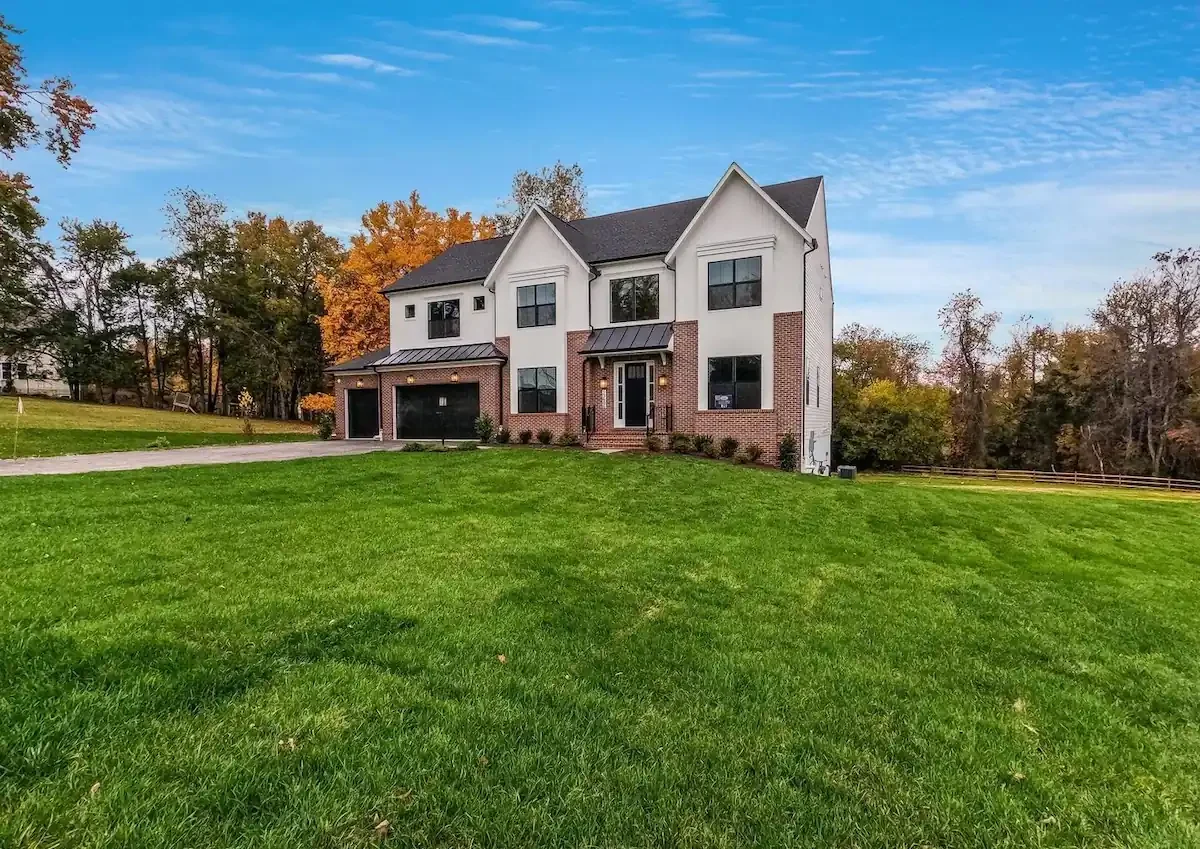
Virginia in early 2026 operates as the high-velocity “Innovation Core” of the Mid-Atlantic. While neighboring jurisdictions have navigated inventory plateaus, the Virginia real estate market remains a primary target for global tech, defense, and aerospace leadership. As of March 1, 2026, the market reflects a clinical stabilization; typical home values have settled into a “Shoppable Equilibrium” near $492,000, with inventory showing a modest rise that provides sophisticated buyers with the necessary time to evaluate high-stakes equity decisions without the frantic competition of years past.
To live in Virginia is to value the intentional synergy between a massive federal defense infrastructure and a residential sanctuary that offers a stabilized, business-friendly lifestyle. As of early 2026, the statewide median home price has reached approximately $450,900, but Northern Virginia continues to lead the Commonwealth with median prices in the $715,000 to $750,000 range.
The 2026 Virginia Economic Narrative: The Innovation Core
Virginia functions as the “National Security Headquarters,” currently executing a development strategy that leverages more than $12 billion in public-private investment. The economics of the state are physically reshaping the tax base through a massive concentration of high-density tech capital and digital infrastructure.
The Economic Narrative: The 2026 surge is fueled by the formal launch of the National Innovation Quarter (National IQ) in Northern Virginia. This district integrates dual-use technology, national security innovation, artificial intelligence research, and advanced computing into a net-zero carbon residential and commercial hub.
Amazon HQ2 Infrastructure: As of early 2026, the Met Park and PenPlace developments are the functional North Stars for the region. While the PenPlace “Helix” building has entered a strategic construction pause to recalibrate for AI-driven workforce efficiencies, the utility infrastructure is 100% shovel-ready. The district now supports over 25,000 Amazon employees, providing a permanent “floor” for property values in the Arlington and Alexandria corridors.
Defense & Aerospace Hub: Defense technology company GRVTY recently finalized its $8 million headquarters expansion in Tysons, while space tech firm Umbra established major satellite operations in Reston. These private capital infusions, supported by state-level incentive packages, ensure that the “Space Coast of the East” remains the primary driver for high-status professional relocation.
Data Center Windfall: Loudoun County remains the “Data Capitol of the World.” In early 2026, the value of commercial properties in the county surged by over 30%, driven almost exclusively by the data center sector. This industry now accounts for over $52 billion of the county’s total property value, allowing for a stabilized residential tax environment that neighboring states cannot match.
The 2026 Fiscal Strategy: The Zero-Percent Local Dividend
Choosing Virginia in 2026 is a clinical financial decision. The “Zero-Percent Local Income Tax Dividend” remains the single most effective financial motivator for high-earners moving from Maryland or D.C. to Virginia.
The High-Earner Advantage: While Maryland enforces a local “piggyback” income tax of up to 3.20%, Virginia has zero local income tax. For a household with a $500,000 annual income, crossing the Potomac into Virginia results in an immediate retention of over $16,000 in annual take-home pay. This is the ultimate “Mission Stability” hook for the DMV professional class.
The Car Tax Rescue: To further improve the state’s competitive position, Virginia counties have utilized the data center commercial windfall to slash Personal Property (Car) taxes. In early 2026, Loudoun County dropped its car tax rate from $4.15 down to $3.09 per $100 of assessed value. Fairfax County has also implemented rate adjustments to offset rising residential assessments.
Real Estate Tax Stabilization: The Arlington County Board advertised a tax rate of $1.053 per $100 of assessed value for 2026, while Fairfax County held steady at $1.1225. Because Virginia relies on annual assessments, the “Constant Yield” principle often forces rates downward when assessments surge, protecting homeowners from the volatility seen in triennial systems.
Submarket Segmentation: The 2026 Luxury Tiers
The Virginia real estate market is best understood through its distinct transit-oriented corridors, each offering a specific investment thesis.
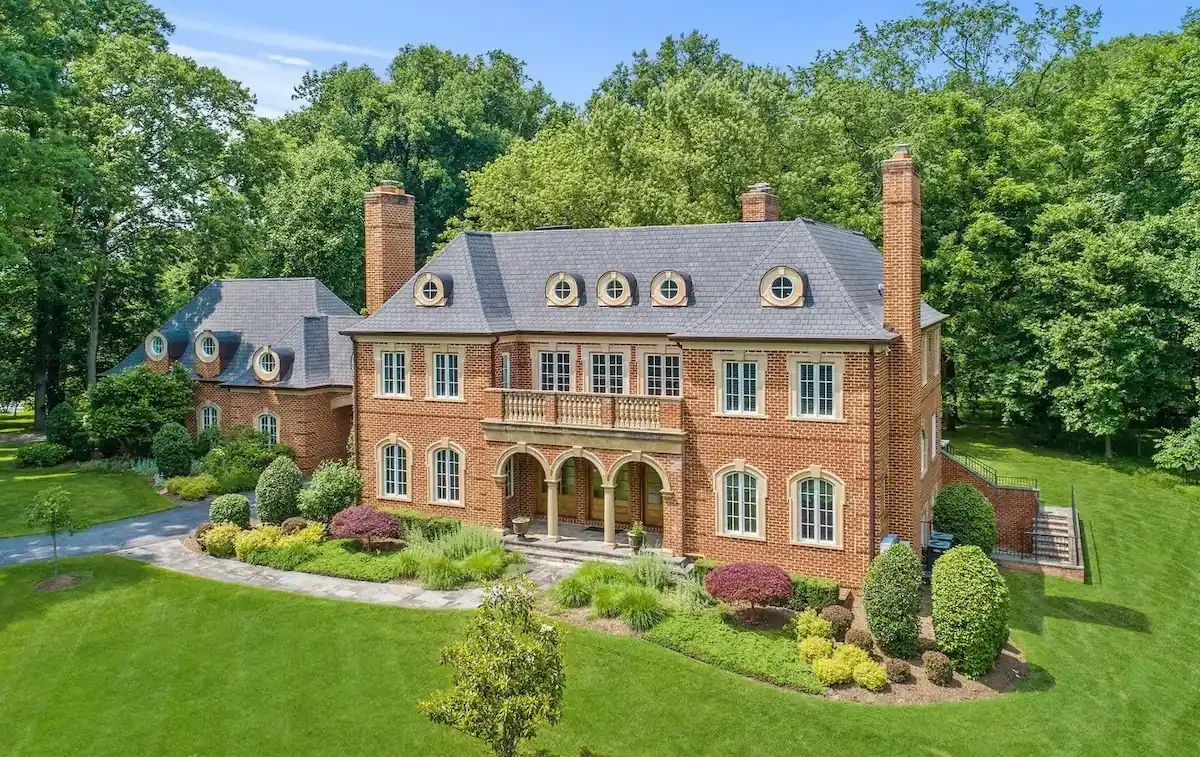
The Platinum Corridor (McLean / Great Falls): The undisputed prestige anchor for the high-status professional class. In 2026, mean residential assessments in the Dranesville district rose by 4.86%, reflecting the persistent demand for high-spec detached estates. These properties are capturing higher premiums when they feature “Modern Heritage” upgrades like Level 3 EV charging and solar-storage resilience.
The Tech Corridor (Ashburn / Reston / Tysons): The boardroom of the northern border. This submarket is anchored by the Silver Line Metro and the new National IQ research hubs. Residents value the walkable urban-suburban blend and proximity to the region’s largest private employers. Learn more about Reston.
The Innovation Hub (National Landing / Arlington): The sensory sanctuary for tech living. With the Potomac Yard Metro and the Virginia Tech Innovation Campus fully operational, this corridor offers high-density elegance. In 2026, we see a shift toward adaptive reuse, with obsolete office buildings being converted into luxury multifamily towers to meet the demand of the Amazon workforce. Learn more about Arlington.
Western Sanctuary (Middleburg / Purcellville): A unique sanctuary where luxury manors sit on multi-acre estates. This area serves as the restorative retreat for the region’s power class. In early 2026, we see a focus on Conservation Easements and private smart-grid infrastructure, as estate owners seek to decouple from urban utility stress.
The Independent Cities: Alexandria, Falls Church, and Fairfax City operate with no county jurisdiction. These cities maintain their own school systems and independent permitting processes, often resulting in higher-velocity market movements and more specialized local governance.
The 2026 Education Architecture: The Boundary Overhaul
In early 2026, school boundaries have become the primary driver of market anxiety and opportunity.
The Fairfax County Boundary Vote: In January 2026, Fairfax County Public Schools approved its first comprehensive boundary overhaul in more than 40 years. This landmark 8–3 vote reshapes attendance zones for approximately 1,700 students beginning in the 2026–2027 school year.
The Transportation Trap: A critical and controversial detail of the Fairfax vote is the decision to deny transportation for grandfathered students who choose to stay at their “original” school. Families moving into these clusters must perform deep due diligence to ensure their academic plans align with the new busing routes and attendance zones.
Loudoun Enrollment Shifts: The Loudoun County School Board is currently managing the Ashburn/Dulles North boundary pivot. As of February 2026, the 5th Grade Option was reaffirmed for rezoned students, though legacy transportation remains a localized point of friction.
Strategic Acquisition: Smart buyers in 2026 are positioning their purchases in “stabilized” pyramids like Oakton and Langley, where the boundary overhaul has reinforced long-term pyramid integrity and protected property values.
Zoning & Infrastructure: The 2026 Frontier
Zoning in Virginia has reached a legislative tipping point in early 2026.
The Missing Middle (EHO) Resurgence: Following the 2025 court rulings, Arlington’s Expanded Housing Option (EHO) permits have returned, allowing for higher density in formerly single-family zones. Similarly, HB 816 is advancing at the state level, which would require localities to allow “By-Right” multifamily development in commercial zoning districts.
The Small-Lot Movement: House Bill 1212 is advancing to designate local zoning districts for homes on small lots. This is part of a 2026 “flurry of housing bills” designed to encourage density while maintaining the character of single-family neighborhoods.
VRE Long Bridge Project: In January 2026, the Virginia Railway Express (VRE) adjusted its schedules to make room for the construction of the Long Bridge Project—the largest rail investment in the region in generations. This project will ultimately double rail capacity between Virginia and D.C., unlocking significant long-term appreciation for homes in the Fredericksburg and Manassas corridors.
Lifestyle Architecture: Tree Canopy & Social Loops
Beyond the economics, Virginia offers a unique weekend rhythm defined by its “D.C.’s Wine Country” status and high-status social anchors.
Social Loops: High-status living in early 2026 revolves around the “Market Hall” culture in Clarendon and private social suites at local equestrian events in Middleburg. Membership trends have shifted toward “Wellness-First” exclusivity, with private social clubs in Tysons and Rosslyn becoming the primary glue for the power class.
Weekend Rhythm: Residents use the W&OD Trail and the restorative loops of the Piedmont for morning activity. The 2026 state budget has prioritized “Green Ribbon” network improvements, ensuring that even the highest-density tech corridors remain connected to Virginia’s natural landscape.
The Smart-Estate Standard: “Move-In Ready” in Virginia means HEPA/UV Air Purification, Cyber-Hardened home offices, and Level 3 EV Garages. With the 2026 launch of the National IQ, homes featuring high-performance tech integration are capturing a 4.5% equity premium.
Strategic Real Estate Investment Narrative: Virginia vs. Maryland
Choosing Virginia in 2026 provides a distinct “Institutional Resilience” profile, particularly for those looking to capitalize on digital infrastructure and defense mission stability.
Inventory Snapshot: As of early 2026, active listings in Northern Virginia have increased by 45.1%, yet supply remains below 2 months in most high-demand corridors. This creates a “moderately tight” market where well-priced homes still sell in under 21 days.
The Data Center Floor: The $13 billion increase in data center valuations provides a massive “floor” for property values in the western county. This commercial windfall ensures the state can continue to fund elite schools and services without aggressive residential tax hikes, protecting your long-term equity.
Landlord-Friendly Climate: Virginia continues to offer a more streamlined regulatory framework for property owners than Maryland. Investors here prioritize “Transactional Flexibility” and the lack of a state-level local income tax, which maximizes the net operating income of luxury rental portfolios.
Maryland vs. Virginia
Choosing between Maryland and Virginia isn’t just a lifestyle choice; it’s a clinical financial decision. Both states offer “Mission Stability” but approach their tax codes and economic growth from entirely different angles. As of March 1, 2026, the data reflects a clear divergence in how these two powerhouses capture high-net-worth capital and handle the current “shoppable” market.
Why People Choose Virginia
Virginia is the “National Security & Innovation Core,” prioritizing business-friendly policies and transactional flexibility.
The Tech Hub: Anchored by Amazon HQ2 and “Data Center Alley,” Virginia leverages a massive commercial tax windfall to subsidize residential services, often resulting in lower effective real estate tax rates.
The Zero-Percent Local Income Tax Dividend: Virginia lacks the local “piggyback” income taxes found in Maryland, making it the preferred choice for high-earning households looking to maximize take-home pay. Crossing the river can save a $500k household over $16,000 annually.
Landlord-Friendly Climate: Virginia offers a more streamlined regulatory framework for property owners, making it a primary target for real estate investors seeking management flexibility.
Coastal & Mountain Access: Virginia provides a wider geographic diversity, from the high-density tech corridor of Arlington to the historic estates of the Piedmont and the resort energy of Virginia Beach.
Our Real Estate Services in Virginia
Success in this transitioning market is built on a structured service architecture. Whether you are managing a high-stakes closing in McLean or evaluating a data center dividend in Loudoun, our team provides specialized regional expertise:
Seller Representation in Virginia: https://www.loveless-dawson.com/services/seller-representation/
Buyer Representation in Virginia: https://www.loveless-dawson.com/services/buyer-representation/
Luxury Sales in Virginia: https://www.loveless-dawson.com/services/luxury-sales/
Market Report Virginia: https://www.loveless-dawson.com/services/market-report/
FAQ
When should I contact a Real Estate Agent in Virginia?
Ideally, reach out at least 6 months before your planned move. Advanced pre-listing and school-pyramid strategies are essential to maximize final net proceeds in the 2026 Virginia real estate market.
Do I really need a strategic advisor for a National Landing relocation?
Yes. Navigating the “Missing Middle” zoning, the HQ2 pause, and the 2026 tax rate updates requires professional advocacy and clinical risk mitigation.
Can you help with pricing or estimates for the 2026 tax cycle?
Yes. We provide deep-dive valuations that account for the 2026 school boundary shifts, the commercial tax windfall offsets, and the clinical market equilibrium.
How long does it usually take to sell a home in Virginia?
A typical Northern Virginia home goes to pending in around 18 to 31 days, depending on the specific submarket and pricing precision.
Strategic Market Leadership
Our operational presence in Virginia is permanent, covering the luxury estates of North Arlington to the tech corridors of Ashburn. We provide high-discretion market strategy and closing expertise that accounts for the specific legislative friction of the 2026 boundary overhaul and the “Zero-Percent” local income tax dividend. Within the DMV, Virginia is regarded as the “Innovation Core,” offering the most consistent equity-to-amenity ratio for tech and defense professionals.
To reach our strategy center, take the I-495 loop toward Bethesda. Use the NIH campus as your landmark. Once you reach the intersection of Wisconsin Avenue and Old Georgetown Road, we are located at 7373 Wisconsin Ave.
Levi Loveless
7373 Wisconsin Ave Suite 1700 Bethesda, MD 20814
(301) 275-7744